A Final Piece of Advice

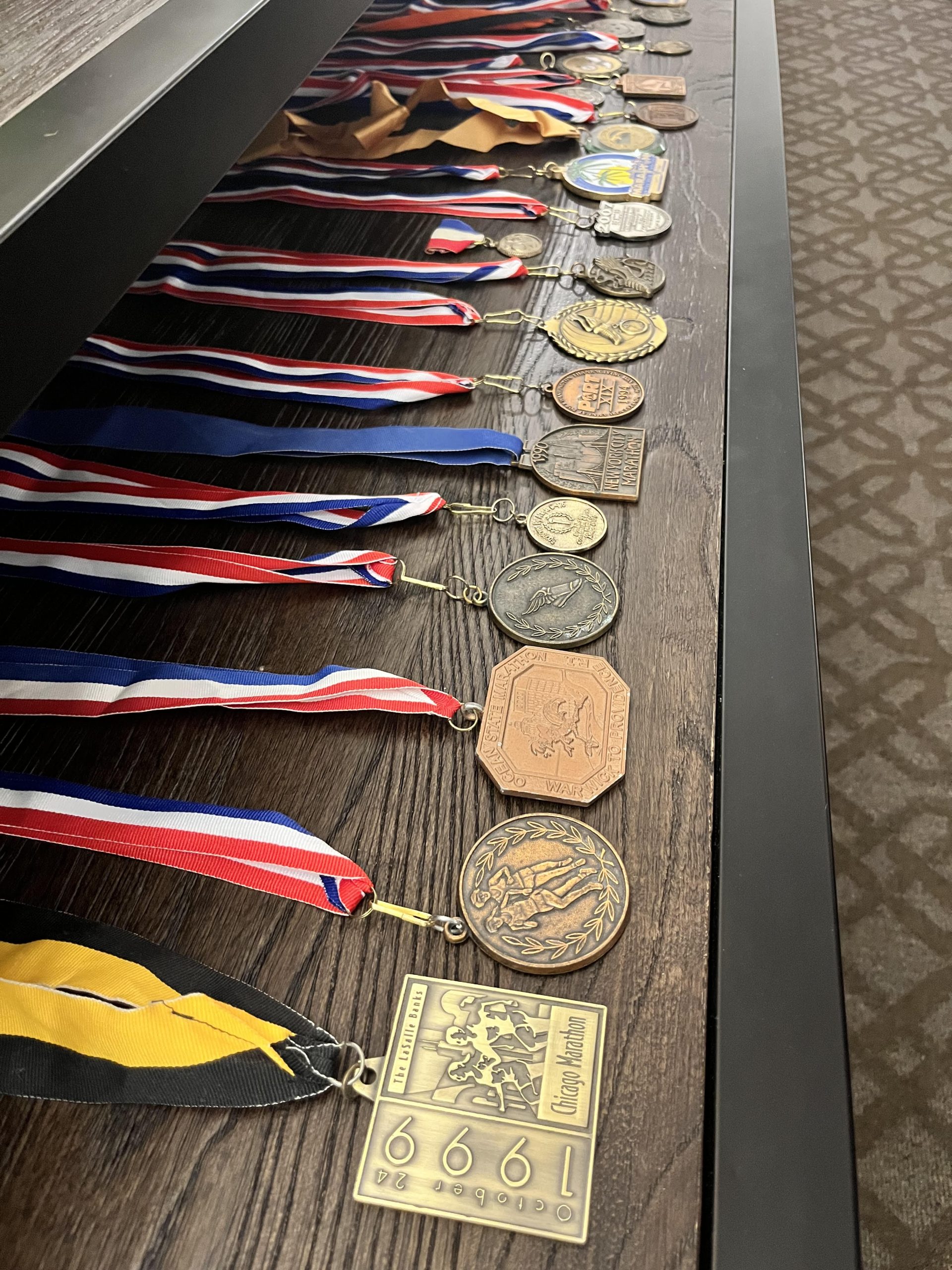
My 86-year-old great aunt, Astrid, was the definition of “cool aunt.” She traveled to every continent except Antarctica. She ran marathons across the Great Wall of China and the site of the first modern Olympic games in Athens, Greece.

It appeared the marathon-running gene did not get passed down my way. At 29, I found I could barely run a mile. I used to play sports in high school and enjoy running, but now I was quite slow and quick to fatigue. Whatever I tried was not helping me increase my distance. I thought back to a few years ago, when my aunt, Astrid, told me that she was still regularly running 5Ks. What? In your 80’s? 

It turns out that in 2023, about 60 runners of the New York Marathon were above the age of 80. Aunt Astrid was not an anomaly but surely had some wisdom to share about running long distances for a long time. 

In mid-October, I called and asked her to put me on a running plan. Her answer really surprised me. 

Her plan was more about rest and recovery than it was about actual running. 

She told me not to run every day, to run slower than I had been and to build up distance very gradually. I asked her how her own exercise plan has changed over her lifetime, and she said, “It hasn’t! I just got slower.” When you’re focused on recovery, it is easier to adapt to age-related changes in speed. 

Throughout late October and early November, I tried Aunt Astrid’s running plan. I increased my distance from one mile to almost two miles in only two weeks. 

I set out to write this blog about longevity and physical resilience in later adulthood, but life had other plans. Less than a month after Aunt Astrid put me on the plan, she was diagnosed with a fast-growing brain tumor. The reality set in: my seemingly invincible aunt was not going to get better. 

What amazed me was that Aunt Astrid was already fighting an invisible illness even as, living wholly in her identity as a runner, she shared her wisdom and legacy with me. 

That reminded me of one of my favorite psychotherapy interventions that I use frequently as a geropsychologist: meaning-centered-psychotherapy. It was initially developed out of Memorial Sloan Kettering Cancer Center to help individuals living with cancer find meaning in life, despite the existential distress and suffering that can come with a life-limiting illness. 

One of the main components of the treatment is the idea of “being” versus “doing.” All our lives, we typically focus on external achievements or actions (doing). When someone develops cancer, they may not be able to do all the things they used to. 

Being, on the other hand, refers to one’s values and connection to a larger purpose. Rather than actions being the primary focus (e.g., running), the goal is to shift one’s focus toward one’s inner experience. What is meaningful about running? How can we connect with what is meaningful behind an action, despite hardship, disability, or illness? How could Aunt Astrid continue to ‘be’ a runner when she could no longer ‘do’ the action of running?

Unfortunately, I was never able to ask my aunt these questions because her illness progressed so quickly. Only a few weeks after we talked on the phone, she lost her ability to speak, was diagnosed with brain cancer and began receiving hospice care. 

Though I never asked Aunt Astrid what was meaningful about running, it was obvious that her identity as a runner continued through her last month of life. Her friends from her New York City running club came to visit her at her bedside. My mom put the New York Marathon coverage on the television in her hospice room, so that she could watch her nephew Zachary crossing the finish line in her honor. She continued to be a runner in every sense of the word, despite her inability to physically run. Eventually, her 20-plus running medals were displayed at her wake. 

As I grieved the loss of this inspiring woman, my partner reminded me that Aunt Astrid’s advice about running can apply to much more than running. Focusing on rest and recovery is important not only in long-distance running but in grief, in hardship and in life.

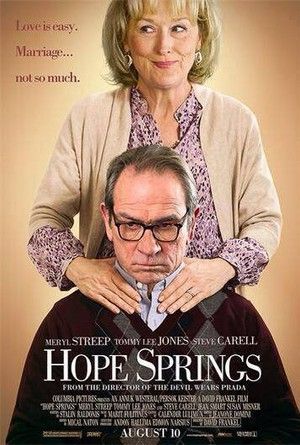
Hope Springs

2012, USA/Canada, 100 min.

After 31 years of marriage and two kids, Kay (Meryl Streep) and Arnold (Tommy Lee Jones) have their life in order. Arnold is satisfied; Kay, on the other hand, has been driven to quiet misery. Forget about sex—any sign of intimacy has eroded. They’re alone together. “Is it too warm in your room?” Arnold asks when she pays a hopeful visit to his bedroom, only to leave in quiet embarrassment. Desperate for change, Kay drags Arnold 1,500 miles to a famed marriage therapist (Steve Carell) for a week of counseling sessions. Jones and Streep play off each other expertly, and director David Frankel does not approach the material as a sex farce or he-said, she-said carping. The couple learns in real time through honest conversations and not-always-successful “sexercises” how to write their final chapters. Alternately touching and insightful, Hope Springs is that rare treat: a sweet, tender movie about people we know. 

We Age in Bursts

Rapid changes occur in our bodies at around age 44 and again at 60

In his early 40s, Vinny Minchillo noticed he needed to work harder in the gym just to maintain his usual level of strength. Then, when he turned 60 a few years ago, he noticed a big change in flexibility. 

“I started making noises whenever I bent down to pick something up, or get up or down on the floor,” he said. “And it seemed like these changes occurred in just a week.” 

So when Minchillo read about a new Stanford Medicine study indicating that aging may occur in “bursts” around ages 44 and 60, he felt seen. “It blew me away. That’s exactly what happened to me.”

The study, published in Nature Aging in August 2024, tracked changes in 135,000 molecules and microbes collected from 108 healthy volunteers ages 25 to 75. Researchers observed that participants seemed to undergo dramatic waves of changes at the molecular level, or “aging bursts,” clustered around two distinct times: at age 44 and age 60.

The study assessed thousands of different molecules as well as participants’ microbiomes—the bacteria, viruses and fungi that live inside the body and on the skin. More than 80 percent of the molecules studied showed rapid changes, which are likely to impact health, surging at certain ages. The study’s cohort consisted of people under 75, but a previous study similarly noted spikes of changes in blood proteins occurring around ages 34, 60 and 78.  

“We expected to see changes in the 60s because we know people’s immune systems decline and disease risks go way up at that time,” said Michael Snyder, PhD, professor of genetics and the study’s senior author. “But the burst in the 40s was a bit unexpected.” 

Among participants in their 40s, the Stanford Medicine study noted significant changes in molecules related to caffeine, alcohol and lipid (fat) metabolism, as well as in molecules linked to the cardiovascular system, skin and muscles. For those in their 60s, changes related to carbohydrate and caffeine metabolism, immune regulation, kidney function, and the cardiovascular system, skin and muscle were observed.

At the molecular level, people don’t seem to age gradually and evenly over time. 

Many people experience major life changes or stresses around 44 and 60, which could contribute to the molecular changes, noted Pooja Patel, DrOT, an occupational therapist and elder care consultant. 

“People start retiring around age 60, for example,” she said. “They may not be as active as they were, or they may become more socially isolated. They may start feeling older because they’ve experienced a loss of purpose.”   

Similarly, women typically reach perimenopause in the mid-to-late 40s, and men undergo hormonal changes, including a drop in testosterone levels, around that age. 

However, changes at the molecular level don’t always lead to immediate changes in a person’s health status. 

“Just because something is happening at the biochemical level doesn’t necessarily translate into meaningful life changes,” said Hesan Fernando, PhD, a neuropsychologist at Corewell Health in Grand Rapids, MI. “We see this in individuals who show Alzheimer’s disease pathology in the brain but don’t actually develop Alzheimer’s clinically.” 

More research is needed to make definitive conclusions, including looking at participants’ health status and surveying a larger, more diverse cohort. But the key takeaway remains: people don’t seem to age in gradual, chronological fashion. Instead, they undergo two periods of rapid change. 

Mirrored in Experience 

Medical professionals and others who work with older adults say, anecdotally, that the research reflects their clinical experience. 

“I frequently see patients experience notable shifts in their health around their mid-40s and early 60s,” said Takyrbashev Kubanych, MD, an internal medicine physician. “There may be a sudden drop in stamina, or a new onset of health issues around these ages, despite leading generally healthy lifestyles. And they seem to emerge suddenly rather than developing gradually over time.”

Erin Williams, PhD, and her husband both noticed abrupt changes when their older friends reached the 60-year milestone. 

“They suddenly looked so much older,” said Williams, a psychologist specializing in treating older adults. “Then when it was our turn, it happened to us.”

Williams vividly remembers her 60th birthday a few years ago. She looked in the mirror and fought back tears and feelings of hopelessness. She had worked in health care through the pandemic, and her sleep was fractured. In the previous six years, three close family members had died, and several others struggled with health setbacks. The toll was showing. She had gained weight. Her energy was depleted, and her mind felt foggy.  

That birthday moment spurred Williams to make lifestyle changes: exercising and moving more throughout the day, cutting back on carbs and devoting more time to rest and self-care. She’s feeling more energetic and optimistic now. While she couldn’t stop the aging process, she said, understanding it has helped her cope. 

Managing the Changes

While the reality of aging bursts is sobering, it could also prove reassuring, according to Susan Rebillet, PhD, a psychologist specializing in older adults. She thinks the Stanford Medicine study could help them better understand and manage the changes that come with aging.

“Things can change dramatically as you get older,” she said. “When patients experience big health setbacks, some assume things will go back to ‘normal’ if they just follow the doctor’s orders, or if they exercise more or eat better.” The research, Rebillet said, helps clients understand that some change is inevitable. 

Similarly, Fernando says he often hears from patients who’ve just been diagnosed with a neurodegenerative disease, like Alzheimer’s or Parkinson’s, who ask, “What did I do wrong?” Understanding that changes are happening at the molecular level, and not always within the patient’s realm of control, might reduce the self-blame. 

While good health habits can help slow aging, Fernando added, “We also know that certain genetic factors will override anything we do environmentally or in terms of lifestyle. And some changes are just an inevitable part of life.”  

Preventive Potential 

The Stanford Medicine study doesn’t change the standard recommendations for maintaining good health later in life: eat healthy, exercise regularly, don’t smoke or overindulge in alcohol. But it does point to possibilities for managing patients’ preventative health care more precisely and more proactively. 

Snyder says that might mean increasing exercise to protect the heart, emphasizing strength training to maintain muscle mass or decreasing alcohol consumption in the 40s, as the ability to metabolize alcohol slows. Similarly, while staying hydrated is always important, it becomes even more critical when kidney function tends to decline in the 60s. 

Snyder believes the research points to ways for treating developing issues more proactively. He was also the lead researcher for a 2020 study that determined that people generally age along certain biological pathways in the body: metabolic, immune, hepatic (liver) and nephrotic (kidney). His team dubbed these “ageotypes.” Those who were metabolic ageotypes, for example, might be at a higher risk for diabetes; those with an immune ageotype, on the other hand, might be more prone to immune-related diseases as they age. 

Determining which ageotype applies might allow physicians to tailor more precise and targeted preventive interventions. For example, currently, doctors don’t treat high blood pressure or high cholesterol until levels reach a particular threshold. As aging bursts and ageotypes are better understood, physicians might prescribe medications or other interventions earlier, to prevent systemic, long-term damage. 

As further research is done, more sophisticated interventions are likely to emerge down the road. In the meantime, the Stanford Medicine study’s results are valuable, Fernando said, because they “highlight these potentially vulnerable times in our lives when we need to be extra careful about the decisions that we’re making.”

Minchillo, who’s still in good health and still working, hopes further research might provide clues to help him stay active as long as possible.  

“I need to stay in shape so that I can play on the floor and roughhouse with my grandson,” he said. “I want to be able to do that as long as I can.” 

Diagnosing Dementia with Lewy Bodies (Part 2)

This is the second of two blogs about Lewy body dementia. You’ll find part 1 here.

Dementia with Lewy bodies (DLB) is a degenerating brain disease that causes dementia and symptoms of Parkinson’s disease. As I wrote in part one, it’s frequently misdiagnosed because it’s so little known. Also, it shows up with a wide variety of symptoms. Some are distinctive and some mimic other dementias. 

When primary care physicians screen for dementia, they are mostly looking for a decline in short-term memory—an early, prominent symptom of the most common dementia, Alzheimer’s.

In contrast, in DLB, the earliest cognitive change is a decline in executive function—that is, the ability to plan and carry out an action. Someone developing DLB will have trouble organizing, planning, reasoning, focusing their attention and doing things, like getting dressed, that need to be done in a certain sequence. Also impaired are visual abilities such as depth perception and eye-hand coordination, and to a lesser extent, memory. 

The challenge is that initially memory problems and these other problems in thinking look very similar. Later, they are more distinct.

At that point, you might see a woman with Alzheimer’s who can still drive her car but can’t find her way home. The procedure for operating the car is  in her long-term memory, which she can still access. Wayfinding depends on storing a short-term memory so it lasts long enough that she can use it, which she can no longer do. 

A man who has dementia with Lewy bodies can’t start his car in the first place, because he’s lost his grasp of the sequence of the steps he must take to start the car.

(These examples are based on cases in an excellent book, A Caregiver’s Guide to Lewy Body Dementia [2020], by Helen Buell Whitworth and James Whitworth.)

In their very late stages, the two diseases again look more alike. 

To make matters worse, there is growing evidence from autopsies that half of all DLB cases show evidence of Alzheimer’s pathology as well. Thus, half of all people with DLB may have symptoms of both.

In that case, does it matter which disease or diseases someone has?

Yes. It’s very important to know—and know early–if dementia with Lewy bodies is playing a role, because DLB makes people very sensitive to medications, including many that would be the drugs of choice for their most troubling symptoms.

Two of these symptoms can appear early in DLB, and both increase the chance that drugs dangerous for people with DLB will be used if a doctor has not made the correct diagnosis. 

One is rapid eye movement (REM) sleep disorder, named for the movements our eyes make while we dream. 

Normally, our muscles are temporarily paralyzed during REM sleep, to keep us from acting out our dreams. For reasons not fully understood, this paralysis sometimes doesn’t happen in diseases caused by Lewy bodies. When someone with DLB has a dream full of action, their thrashing arms and legs put them and their bed partner at risk of injury.

REM sleep disorder is not a part of Alzheimer’s. That makes it a red flag for DLB, even when it precedes, as it often does, any other symptoms.

Hallucinations are the second symptom that can show up early in dementia with Lewy bodies and that carry the risk of being treated inappropriately if DLB has not yet been diagnosed. Generally, the DLB hallucinator sees realistic but benign figures, like children or small animals, and isn’t frightened by them. But there is wide variation.

Millie, a 70-year-old woman, had early dementia with Lewy bodies. One day, when her daughter called, Millie told her, “Grandpa’s sitting in the blue chair in the living room. He’s been sitting there all day.”

“Do you mean Dad?” her daughter asked.

“No. Grandpa Freddy.”

“But that’s impossible. He’s been dead 60 years!” her daughter protested.

“Well, I can’t help that. There he is,” Millie calmly told her.

In contrast, if a person with Alzheimer’s develops hallucinations it will be much later in the disease, and they are not likely to be as benign.

Sometimes, dementia with Lewy bodies is mistaken for a psychiatric illness because it can cause anxiety, depression and agitation, as well as hallucinations and delusions. 

Before my friend’s mother, Suzy, was diagnosed with DLB, she was treated for anxiety and agitation with diazepam (Valium). It caused such deep sedation, everyone was afraid she might not come out of it. 

The doctor took her off diazepam, but when the sedation wore off, her agitation returned, along with disturbing hallucinations, so the doctor, still not realizing she might have dementia with Lewy bodies, gave her haldoperol (Haldol), one of the most dangerous drugs for anyone who has dementia with Lewy bodies. 

Suzy developed severely rigid muscles, and her thinking declined precipitously. Once off the haldoperol, she improved but was never again able to live independently.

Given the sometimes tragic consequences that can result from DLB not being diagnosed early enough, if you have reason to be concerned that you or someone you love may have it, there’s comfort in knowing that you can get an answer. 

Medicine has reached a consensus on the symptoms required to make a diagnosis. I will list the symptoms in order of their importance and then tell you where you can go to get an accurate diagnosis.

Besides dementia, which is the essential feature, at least two of these four core symptoms must be present:

  • Fluctuating levels of attention and focus; spells of staring or unresponsiveness.
  • Recurrent visual hallucinations—fully formed and realistic images. 
  • REM sleep behavior disorder.
  • Parkinsonism: slow movements, tremors at rest, rigid muscles.

Other symptoms common in DLB can support the diagnosis, such as sensitivity to medications, repeated falls, daytime sleepiness or a major change in mood—a formerly enthusiastic person becoming immobilized by apathy, for example. 

If the diagnosis remains in doubt, a type of brain scan called a DaTscan is sometimes used. It reveals the level of dopamine in the brain—a low level is characteristic of DBL. The results of the test are not definitive but are used as an adjunct to a physician’s assessment.

If this review of the important symptoms matches some of the symptoms you see in a family member, you need to find someone who can give you an accurate diagnosis.

When people move on from their primary physician to a neurologist, they commonly feel they’re going to a specialist who will have the answers. But Jason Karlawish, MD, co-director of the University of Pennsylvania’s Memory Clinic, says, “Finishing neurology training doesn’t make you an Alzheimer’s doctor.” I would add, much less a DLB doctor.

Neurology today is largely divided into subspecialties. For example, some neurologists concentrate on stroke, others on epilepsy.  For a diagnosis of dementia with Lewy bodies, you need a neurologist who specializes in dementia or in movement disorders.

The best place to start looking for a specialist is the Lewy Body Dementia Association website. There you will find information about their Research Centers of Excellence (RCOE). By all means, go to one of them if you can!

There are 20 such centers across the United States, and they have proven expertise in the diagnosis and care of people with DLB. Even if there isn’t a center within reasonable reach, any RCOE or the LBDA itself may be able to help you find a qualified neurologist near you. 

Then the bigger challenge begins: living with dementia with Lewy bodies—as a diagnosed person or as a caregiver. If you know the symptoms and the behavior that stems from DLB, you will be better prepared to live this experience with compassion and grace. 


When Older Men Live Alone, Their Connections to Others Often Wither 

Aging alone is more and more common, thanks to longer lives and growing divorce rates

For this article, journalist Judith Graham looked at what happens to many men who wind up living alone in their later years. She interviewed experts and talked to men themselves about their lives and what can help. KFF Health News posted her article on October 10, 2024. It also ran on the Washington Post. Funding from the Silver Century Foundation helps KFF Health News develop articles (like this one) on longevity and related health and social issues. 

At age 66, South Carolina physician Paul Rousseau, MD, decided to retire after tending for decades to the suffering of people who were seriously ill or dying. It was a difficult and emotionally fraught transition.

“I didn’t know what I was going to do, where I was going to go,” he told me, describing a period of crisis that began in 2017.

Seeking a change of venue, Rousseau moved to the mountains of North Carolina, the start of an extended period of wandering. Soon, a sense of emptiness enveloped him. He had no friends or hobbies—his work as a doctor had been all-consuming. Former colleagues didn’t get in touch, nor did he reach out.

His wife had passed away after a painful illness a decade earlier. Rousseau was estranged from one adult daughter and in only occasional contact with another. His isolation mounted as his three dogs, his most reliable companions, died.

Rousseau was completely alone—without friends, family or a professional identity—and overcome by a sense of loss.

“I was a somewhat distinguished physician with a 60-page resume,” Rousseau, now 73, wrote in the Journal of the American Geriatrics Society in May. “Now, I’m ‘no one,’ a retired, forgotten old man who dithers away the days.”

In some ways, older men living alone are disadvantaged compared with older women in similar circumstances. Research shows that men tend to have fewer friends than women and be less inclined to make new friends. Often, they’re reluctant to ask for help.

“Men have a harder time being connected and reaching out,” said Robert Waldinger, MD, a psychiatrist who directs the Harvard Study of Adult Development, which has traced the arc of hundreds of men’s lives over a span of more than eight decades. The men in the study who fared the worst, Waldinger said, “didn’t have friendships and things they were interested in—and couldn’t find them.” He recommends that men invest in their “social fitness” in addition to their physical fitness to ensure they have satisfying social interactions.

In the United States, men over the age of 75 have the highest suicide rate. 

Slightly more than one in every five men, ages 65 to 74, lives alone, according to 2022 Census Bureau data.  That rises to nearly one in four for those 75 or older. Nearly 40 percent of these men are divorced, 31 percent are widowed and 21 percent never married.

That’s a significant change from 2000, when only one in six older men lived by themselves. Longer life spans for men and rising divorce rates are contributing to the trend. It’s difficult to find information about this group—which is dwarfed by the number of women who live alone—because it hasn’t been studied in depth. But psychologists and psychiatrists say these older men can be quite vulnerable.

When men are widowed, their health and well-being tend to decline more than women’s.

“Older men have a tendency to ruminate, to get into our heads with worries and fears and to feel more lonely and isolated,” said Jed Diamond, PhD, 80, a therapist and the author of Surviving Male Menopause and The Irritable Male Syndrome. 

Add in the decline of civic institutions where men used to congregate—think of the Elks or the Shriners—and older men’s reduced ability to participate in athletic activities, and the result is a lack of stimulation and the loss of a sense of belonging.

Depression can ensue, fueling excessive alcohol use, accidents or, in the most extreme cases, suicide. Of all age groups in the United States, men over age 75 have the highest suicide rate by far.

For this column, I spoke at length to several older men who live alone. All but two (who’d been divorced) were widowed. Their experiences don’t represent all men who live alone. But still, they’re revealing.

The first person I called was Art Koff, 88, of Chicago, a longtime marketing executive I’d known for several years. When I reached out in January, I learned that Koff’s wife, Norma, had died the year before, leaving him hobbled by grief. Uninterested in eating and beset by unremitting loneliness, Koff lost 45 pounds.

“I’ve had a long and wonderful life, and I have lots of family and lots of friends who are terrific,” Koff told me. But now, he said, “nothing is of interest to me any longer.”

“I’m not happy living this life,” he said.

Nine days later, I learned that Koff had died. His nephew, Alexander Koff, said he had passed out and was gone within a day. The death certificate cited “end stage protein calorie malnutrition” as the cause.

Here I am, almost 80 years old—alone. Who would have guessed?

—Verne Ostrander

The transition from being coupled to being single can be profoundly disorienting for older men. Lodovico Balducci, MD, 80, was married to his wife, Claudia, for 52 years before she died in October 2023. Balducci, a renowned physician known as the “patriarch of geriatric oncology,” wrote about his emotional reaction in the Journal of the American Geriatrics Society, likening Claudia’s death to an “amputation.”

“I find myself talking to her all the time, most of the time in my head,” Balducci told me in a phone conversation. When I asked him whom he confides in, he admitted, “Maybe I don’t have any close friends.”

Disoriented and disorganized since Claudia died, he said his “anxiety has exploded.”

We spoke in late February. Two weeks later, Balducci moved from Tampa to New Orleans to be near his son and daughter-in-law and their two teenagers.

“I am planning to help as much as possible with my grandchildren,” he said. “Life has to go on.”

Verne Ostrander, a carpenter in the small town of Willits, CA, about 140 miles north of San Francisco, was reflective when I spoke with him, also in late February. His second wife, Cindy Morninglight, died four years ago after a long battle with cancer.

“Here I am, almost 80 years old—alone,” Ostrander said. “Who would have guessed?”

When Ostrander isn’t painting watercolors, composing music or playing guitar, “I fall into this lonely state, and I cry quite a bit,” he told me. “I don’t ignore those feelings. I let myself feel them. It’s like therapy.”

Ostrander has lived in Willits for nearly 50 years and belongs to a men’s group and a couples’ group that’s been meeting for 20 years. He’s in remarkably good health and in close touch with his three adult children, who live within easy driving distance.

“The hard part of living alone is missing Cindy,” he told me. “The good part is the freedom to do whatever I want. My goal is to live another 20 to 30 years and become a better artist and get to know my kids when they get older.”

Put yourself in a situation where you’re going to see the same people over and over again. Because that’s the most natural way conversations get struck up and friendships start to develop.

—Robert Waldinger, MD

The Rev. Johnny Walker, M.Div, 76, lives in a low-income apartment building in a financially challenged neighborhood on Chicago’s West Side. Twice divorced, he’s been on his own for five years. He too has close family connections. At least one of his several children and grandchildren checks in on him every day.

Walker says he had a life-changing religious conversion in 1993. Since then, he has depended on his faith and his church for a sense of meaning and community.

“It’s not hard being alone,” Walker said when I asked whether he was lonely. “I accept Christ in my life, and he said that he would never leave us or forsake us. When I wake up in the morning, that’s a new blessing. I just thank God that he has brought me this far.”

Waldinger recommended that men “make an effort every day to be in touch with people. Find what you love—golf, gardening, birdwatching, pickleball, working on a political campaign—and pursue it,” he said. “Put yourself in a situation where you’re going to see the same people over and over again. Because that’s the most natural way conversations get struck up and friendships start to develop.”

Rousseau, the retired South Carolina doctor, said he doesn’t think about the future much. After feeling lost for several years, he moved across the country to Jackson, WY, in the summer of 2023. He embraced solitude, choosing a remarkably isolated spot to live—a 150-square-foot cabin with no running water and no bathroom, surrounded by 25,000 undeveloped acres of public and privately owned land.

“Yes, I’m still lonely, but the nature and the beauty here totally changed me and focused me on what’s really important,” he told me, describing a feeling of redemption in his solitude.

Rousseau realizes that the death of his parents and a very close friend in his childhood left him with a sense of loss that he kept at bay for most of his life. Now, he said, rather than denying his vulnerability, he’s trying to live with it. “There’s only so long you can put off dealing with all the things you’re trying to escape from.”

It’s not the life he envisioned, but it’s one that fits him, Rousseau said. He stays busy with volunteer activities—cleaning tanks and running tours at Jackson’s fish hatchery, serving as a part-time park ranger and maintaining trails in nearby national forests. Those activities put him in touch with other people, mostly strangers, only intermittently.

What will happen to him when this way of living is no longer possible?

“I wish I had an answer, but I don’t,” Rousseau said. “I don’t see my daughters taking care of me. As far as someone else, I don’t think there’s anyone else who’s going to help me.”

The Final Days

My mom, Sally, was eating very little during her last week. She was sleeping more, chatting less and she changed her bathroom routine.

For a year or so, I would stand in front of her walker in front of her recliner (which she never reclined), she would grab onto my hands and, as she pulled herself up, I would lean back until she was on her feet. She’d walk the short distance to the bathroom (she refused a commode, as that would signal some type of aging weakness) with either me or her aide, Lakita, trailing behind. She’d thankfully do what she needed to do with no help from me and only occasional help from Lakita, then we’d walk back to her recliner—which I thought of as The Chair, and which was where she spent the majority of her time.

Two days before what would be her last, Mom decided she no longer wanted to walk to the bathroom, so we got out the portable wheelchair. The New Chair.

Late on her last Friday, Mom rolled to the bathroom, stood up outside the door, reached for the knob, and said, “Aw, the hell with it.” She sat back down in The New Chair and rolled back to her spot in the living room, where she would remain.

The next morning, I got a text image from Mom’s grandniece—Mom had become a great-great aunt. I showed Mom a picture of the baby girl, and she remarked that she hadn’t finished knitting a hat for her. I told her she’d better get to work on it. She smiled and nodded.

As Sally Ramona was about to end her life in New York, Stella Rae had begun her life in Colorado.

The rest of the morning was quiet, but in the afternoon, Mom got restless.

She asked me to help her unbutton her shirt. I told her she wasn’t wearing a shirt, but a house dress. And there were no buttons.

She asked me to help her get the dress off. I told her she couldn’t take the dress off because then she’d be naked.

As she continued to fuss, I called Visiting Nurses and was told this was not uncommon. It was time for The Morphine. 

Two months or so earlier, when Mom had started palliative care, a nurse had arrived with a little cardboard box and told me to hide it in the refrigerator. It was The Morphine and The Haldol. I had always thought that the professionals would do the work during end-of-life care, and I said to the nurse, “I’m not giving my mom morphine.”

“You may have to,” she replied.

So on that last day, I asked my mom if she would like a drop or two of morphine.

“What do you think?” she asked.

The last thing I wanted to do was think, I thought. If I didn’t give it to her, and she was unnecessarily uncomfortable, I would feel awful. If I did give it to her, and it hastened her demise, I would feel awful. 

Two drops.

An hour later she was still fussing. Not hurting, just agitated.

The nurse on the phone said to give her one drop of The Haldol.

My big regret was wishing one of the nurses had mentioned that the final drop might literally be final. Maybe we could have had a more meaningful farewell. Because after The Haldol, Mom was still breathing, but she stopped moving.

A nurse actually visited that night, took Mom’s vitals—her oxygen was a little low—and told me she had begun “transitioning.”

“What?” I asked. What would this “transitioning” entail? If she woke up, would I need to give her more drugs? Would a palliative nurse stay and help me through the process?

The nurse told me I could call if I needed help, packed up her things and left.

I sat with my mom, talking quietly even though I had no idea if she could hear me, until around 3 a.m. She was still breathing, and I went to sleep.

When I awoke around 6 a.m, her breathing had stopped. Mom looked the same, but everything was different. 

I cried, like I’m crying now as I write this. No matter how prepared you are, you’re never fully prepared. The apartment suddenly seemed very quiet.

Diagnosing Dementia with Lewy Bodies (Part 1)

This is the first of two blogs about Lewy body dementia. You’ll find part 2 here.

Some years ago, my friend Molly Grant, was concerned about her husband, Todd, so she asked his sister, Peggy, if she’d noticed any change in him. 

“Yes,” Peggy admitted. “He seems to have lost his self-confidence. And his posture has changed; he’s slumped.”

Todd also seemed confused at times. He had what Molly called his cloudy days, but sometimes within hours his mind would clear. In addition, neither of them was sleeping well because he was so restless at night.

When Todd finally agreed it was time to see a doctor, his primary care physician gave him a mini-mental exam—a 10-minute test that screens for cognitive impairment. He scored 25 out of 30.

“That’s just on the edge,” the doctor said. “It could be early Alzheimer’s, but only time will tell. Come back in six months and we’ll check again.”

Once home, Molly wondered how Todd would have scored if he had been tested on one of his cloudy days.

Not long after, Todd tripped and fell. He wasn’t hurt, but when it happened again a week later, Molly was sure it had to do with the way he shuffled when he walked. He was also having trouble with small tasks, like buttoning his shirt, and his falls were making him anxious.

“Something’s wrong with my body,” he told Molly.

A neurologist they consulted was immediately taken by Todd’s shuffling gait and his anxiety. He detected rigidity in his muscles and slowness in his movements.

“Todd, I think you have Parkinson’s Disease,” he announced.

Molly mentioned Todd’s borderline score on the mini-mental test, but the doctor said, “Nah, that’s close enough to normal.”

Todd started physical therapy to maintain his range of motion. It was a challenge when his mind was cloudy. Furthermore, a medication the neurologist prescribed for him for his Parkinson’s rigidity made his confusion worse.

His best friend from college was now a neurosurgeon. When he learned of Todd’s symptoms and diagnosis, he wasn’t satisfied. He sent the Grants to Dr. P., a neurologist friend of his. 

During the 15 minutes Dr. P. spent with Todd and Molly, he took four phone calls. When it looked as though he was going to dismiss them without a diagnosis, Todd blurted out, “What’s the diagnosis?”

“You have dementia with Lewy bodies.” Pause. “And Parkinson’s.” And he was gone.

It was a shock to Molly and Todd that he had two diseases. Furthermore, they had never heard of dementia with Lewy bodies. A bit shaken, before they left for home, they called his sister Peggy to share the news. By the time they got home, Peggy had googled Lewy bodies and emailed them several links, most importantly that of the Lewy Body Dementia Association.

Lewy body dementia is confusing in several ways. It’s an umbrella term for two closely related diseases: dementia with Lewy bodies (DLB) and Parkinson’s disease dementia (PDD). Both combine the motor symptoms of Parkinson’s disease (PD) and the cognitive symptoms of dementia. 

Like Parkinson’s itself, both are caused when a normal protein in the brain—alpha-synuclein–begins to form clumps inside brain cells. Called Lewy bodies, the clumps eventually cause brain cells to die and the brain to shrink.

DLB and PDD cause slightly different symptoms but a big difference in timing.

PDD’s cognitive symptoms show up only after the person has had PD motor symptoms—tremor, shuffling gait, slow movements, rigidity—for at least a year, often not until the person is in late PD. Dementia with Lewy bodies, on the other hand, generally starts with cognitive symptoms, and within a year the motor symptoms of Parkinson’s begin.

Therefore, it’s clear that Todd, whose cognitive problems came first and PD symptoms soon after, has DLB, not PDD, and certainly not both dementia with Lewy bodies and Parkinson’s. For DLB patients, Parkinson’s symptoms are part of the disease.

Todd is not alone in being misdiagnosed at first. An autopsy study showed that health care providers miss DLB in one out of three cases.

Yet after Alzheimer’s disease, DLB is the most common form of neurodegenerative dementia. It’s been called the most common disease no one has heard of. 

An estimated 6.7 million Americans have Alzheimer’s disease, and another million have Parkinson’s. Both are well known. Though about 1.4 million people have dementia with Lewy bodies, it’s almost unknown.

Why?

DLB was first documented in autopsy in 1976, but it wasn’t until 1996 that experts reached a consensus on how to diagnose it. Medical schools began to teach about it some years later. That’s why many physicians in practice today don’t know of it.

But even for those who have heard of DLB, it’s challenging to diagnose. In part 2, I’ll describe the core symptoms necessary for a diagnosis, and other supportive symptoms that help lock it in, as well as symptoms that can be misleading.

I’ll also describe how to find a physician who is knowledgeable about dementia with Lewy bodies. It’s important to diagnose DLB early and I’ll explain why.


The Spy Coast: A Thriller (The Martini Club)

By Tess Gerritsen — Thomas & Mercer, 2023

Tucked away in a small town in Maine, unbeknownst to the neighbors, a group of retired spies gathers as old friends. They call themselves the Martini Club. Maggie Bird is a seasoned intelligence officer, raising chickens and growing vegetables on her small farm. When a strange woman knocks on her door with a cryptic message, Maggie knows it could only have originated from someone involved in a decades-old case that went horribly wrong. The next day, this stranger lies murdered in Maggie’s driveway. While her friends revisit the case that’s been brought back to life, Maggie navigates a web of contemporary conspiracies. When local law enforcement officer Jo Thibodeau gets involved, she suspects the Martini Club retirees are being coy about a secret past. 

As we’re drawn into the world of espionage, deceit and intrigue, it would be easy to forget that these savvy former agents are long retired—it’s refreshing to see them portrayed as computer-literate, competent and up for adventure. If you enjoy these retired spies, they’ll return in The Summer Guests, set to be released in March 2025.

The Pursuit of Contentment

Sometimes lately, when I enter my apartment, I can’t help noticing how good it feels to be home. I’ve lived here for 18 years, so why this flush of pleasure now? I wondered until I identified the feeling: contentment. 

That got me thinking about how contentment is different from happiness, which is more intense but fleeting—often triggered by getting what you want. Contentment is about wanting what you already have and feeling good about it—the way I feel when I walk through my front door. 

In hard-driving, competitive societies like ours, the quest for contentment hardly exists, but researchers report that finding contentment gets easier with age. What’s more, it’s possible to cultivate that quiet sense of well-being and feel content more often. 

Studies show that contented people tend to be healthier—though it’s possible that the reverse is true, and healthy people are more likely to feel contented. Or that both things are true and form a kind of beneficial feedback loop: being healthy promotes contentment, which makes you healthier, which keeps you content, and so on. 

Why is contentment easier to come by in later life? The Harvard Study of Adult Development, which has been following some of its subjects for more than 80 years, found that with age, many people are better able to slough off small worries and focus on what’s important to them—and what makes them happy. My own guess is that, post-retirement, many people also feel less stressed. The ambitions that drove them earlier in life no longer do, and they care less about what others think of them.

An article by psychologist Jessica Koehler, PhD, summarizes ways to cultivate contentment. Of course, it’s hard to feel content if you’re trapped by poverty or a chronic illness, but some of her suggestions are quite simple. When big things are going wrong, it can help to focus on little things that are still going right. 

In fact, a number of Koehler’s tips are about what you pay attention to, and to my surprise, she mentions several things I already do. (I haven’t listed all her tips here, and I’ve expanded on many from my own experience.) 

Practice thankfulness. Start each day by thinking about three things, big or small, that you’re grateful for. Dwell on them a bit. When I remember to do this, it usually puts my worries in perspective. Koehler also suggests keeping a gratitude journal.

Practice mindfulness. You’re being mindful when you’re fully present in the moment: aware of your body, your surroundings and your thoughts, but you let those thoughts drift by without judging them.

An ordinary day offers many chances to pause, focus mindfully on the present moment and appreciate small pleasures. 

For instance, while I take the first few bites of breakfast, I close my eyes and concentrate entirely on the taste and texture of what I’m eating. Until I read Koehler’s article, I didn’t know this was a form of mindfulness—it was just something I liked doing because usually at meals, I’m too busy thinking about other things to appreciate anything less attention-getting than chocolate. 

Mundane tasks can provide another opportunity. For example, as you fold laundry, still warm from the dryer, pay attention to how it feels and smells as you smooth the fabric. 

Connect with nature—something else I already do just because it feels good. Sit down somewhere quiet, close your eyes and soak up the sunlight. Notice the breeze ruffling your hair, the birds chirping nearby, the smell of freshly cut grass. Drink in some long, deep breaths. 

Celebrate small achievements. Congratulate yourself when you remember things that are easy to forget, like where you left your car in a crowded parking lot. Small tasks, long delayed, like sorting out a cluttered drawer, can also provide a lift, if you let them. 

Be kind to yourself. Forgive yourself for past mistakes. Listen to what you’re thinking and the next time you scold yourself or question your own abilities, notice what you’re doing and stop. 

Focus on your relationships. Close, warm relationships probably contribute most to contentment in later life. Meaningful conversations with friends and family can feel especially good—the times when you get to talk openly and honestly about what matters to you and to them. 

Listen actively. You’re doing that when you focus all your attention on what another person is saying. You ignore distractions and resist the temptation to think about how to respond or whether you agree or disagree. Just listen. This isn’t easy to do, but if you’ve ever had 100 percent of someone else’s attention, you know how good that feels—usually to both people.      

Thank others. In particular, express thanks for the things they do for you that both of you take for granted. That’s good for your relationship and it’s also a reminder of how much you have to be grateful for. 

Be generous to others. You’ll feel good about yourself afterward and earn a little nudge of contentment. 

Develop new skills. Try something creative and intensive, like painting, writing or playing a musical instrument. As you learn, appreciate each gradual improvement. 

Laugh at yourself. As you age, lots of little things go wrong. Finding them funny can make them more tolerable. I’m still chuckling over the morning I forgot to put a mug under the spout of the coffee maker. I failed to notice the puddle of coffee spreading across the counter because I was busy describing to my daughter the last time I forgot the mug.  

Finally, one last way to nurture contentment is to notice when you’re feeling content and pause to enjoy that thrum of quiet satisfaction. 

Does this explain why coming home often feels so good to me? Have I pursued contentment and caught it? 

I doubt if anyone can do that. Contentment comes and goes—certainly, mine does—but it comes more often than it used to. And it’s definitely worth pursuing. 


Today’s Phone Etiquette

I remember the excitement of the telephone ringing in my family home in the 1960s. The call might not be for me but for my parents or a sibling, which would be a letdown to a preteen. Phone calls were an escape for me—without a car, I was confined to my family and the neighborhood kids for companionship. A long phone conversation was a luxury. 

I remember the strict time limits applied for my calls, so anyone trying to reach my mother could get through. (No call-waiting.) We had a primary phone in the kitchen, one in my parents’ bedroom and an extension downstairs; until the touch tone came out, we dialed. I preferred the extension, so I could stretch the curly cord into the laundry room for privacy. It would get so tangled. More than once, it came out of the phone’s base. 

Before too long, my parents sprang for a “teen phone” with a separate phone number. Gone were the days of the please-get-off-the-phone dance and pantomime, when Mom was holding up the line, organizing her bridge group, one friend at a time. The big phone book would come every year. I knew my friends’ phone numbers by heart, and curiously, I still remember many of them. 

Fast-forward to today, when I don’t answer my phone. Yes, I pay for cell service for my iPhone, but if it rings, I don’t answer it. It’s mostly spam; I can count on my true friends and colleagues to text before calling to see if it’s a convenient time to connect. I don’t enjoy talking on the phone as much as digital communication. I schedule calls with my daughters for when they can put me on speakerphone in their cars, and I sit with a large cup of tea. 

Unscheduled phone calls are disruptive. They demand immediate attention and can interrupt other activities or conversations, whereas messages can be managed more discreetly and at the recipient’s convenience. Texting (preferred) or emailing allows you to focus on the message and be less likely to say something untrue or that you’ll regret. 

Phone calls are more time consuming than sending a quick text message or email. Their efficiency drives me toward communication methods that are more efficient within my daily routines. I don’t listen to or leave voicemail messages either. I’ll know you called if we have shared our numbers in Contacts.

So don’t call me, I’ll call you—but I’ll text first. 

When Less Is More: The Need for ‘Deprescribing’

Many older people should be taking fewer medications

Every time Jodie Pepin’s mother saw another physician, it seemed like she was prescribed yet another medication. Each time Pepin wondered, “Why are they giving her that? She already has dementia.”

Pepin, clinical pharmacy program director at Harbor Health in Austin, TX, knew the medications could exacerbate dementia, cause drowsiness and affect gait. When her mother fell, multiple times, she blamed the drugs. 

“These medications just kept making it worse,” said Pepin, PharmD, who is also a clinical assistant professor at the College of Pharmacy at the University of Texas at Austin. “It frustrated me to no end.” 

Pepin lived in another state, so she reviewed her mother’s medications and had many conversations with doctors over the phone. Each time, the doctor would stop one or two drugs. Then another health issue would arise for her mother, who would see another doctor, who would prescribe yet another medication. 

That kind of medical doom loop is not uncommon among older people, particularly those with multiple chronic conditions. Polypharmacy—taking five or more medications—is associated with increased hospital admissions, falls and premature mortality.  

The problem has led to a growing movement among medical schools and hospital systems toward “deprescribing” medications: discontinuing drugs that are either potentially harmful or no longer required, or reducing the dosage or frequency, always with medical supervision. 

Almost 90 percent of adults 65 and up take at least one prescription drug regularly; 54 percent of older adults report taking four or more prescription drugs. As the number of medicines goes up, medication management becomes more complex, and the risk of adverse reactions grows.  

As people age, kidney and liver functioning decrease, along with lean body mass, affecting the way drugs are metabolized. Medications may stay in an older person’s system longer, increasing the risk and severity of side effects. 

Troubles with the System

The fragmented nature of the US health care system also contributes to the problem.  

“Many older people see multiple doctors in multiple specialties,” said DeLon Canterbury, PharmD, founder of GeriatRx, a concierge telehealth service. “One is focused on the kidney, the other is focused on the heart, and so on. These providers are following their guidelines but not thinking about the whole picture.” 

As a result, patients may end up with duplicate prescriptions for similar medications or medications that interact. 

Older patients are also at risk for what medical professionals call a “prescribing cascade,” according to Dominick Trombetta, PharmD, associate professor of pharmacy practice (geriatrics/internal medicine) at Wilkes University School of Pharmacy in Wilkes-Barre, PA. 

A common scenario: a doctor prescribes amlodipine, a medication for high blood pressure. It’s generally safe but can cause a patient’s feet to swell. Instead of trying a different blood pressure medication or adjusting the dosage, the provider assumes the edema is yet another age-related condition and prescribes a diuretic. 

The diuretic, in turn, creates an electrolyte imbalance, which leads to a prescription for a potassium supplement, which causes heartburn, which leads to a prescription for antacids.

Some whole categories of drugs carry special risks for older people. 

Some medications can be dangerous for older people or patients with certain health conditions. Canterbury saw this with his grandmother, Mildred, who had mild dementia. When she began declining rapidly, the family moved Mildred out of assisted living. But she didn’t improve. 

“She was wandering around the house, hiding her dentures, hiding her glasses and not remembering us,” Canterbury said. “It was heartbreaking.”  

A medication review by the family’s pharmacist revealed that Mildred was taking an antipsychotic with a “Black Box Warning” (the Food and Drug Administration’s highest safety-related warning). The drug was associated with “increased mortality in elderly patients with dementia-related psychosis.” 

Mildred returned to her baseline level of functioning after she stopped the meds.

Trombetta notes that some drug categories tend to be inappropriately prescribed for older patients. Proton pump inhibitors, such as omeprazole, omeprazole or pantoprazole, are often prescribed in hospitals to prevent gastrointestinal bleeding. That’s appropriate while the patient is in the hospital, but the patient may no longer need it after discharge, and continued use increases the risk for fractures, severe diarrhea, pneumonia or B12 deficiency. 

Diabetes medications are also frequently prescribed inappropriately. For younger or middle-aged patients, doctors prescribe for tight control of blood sugar levels, because high blood sugar can harm the heart and pose other long-term risks. For older people, it often makes sense to relax the control of blood sugar levels and reduce or change medications accordingly. The goal is to minimize the risk of hypoglycemia (dangerously low blood sugar), which can lead to falls or even death.    

Taking Precautions

To help avoid polypharmacy issues, the American Geriatrics Society publishes the Beers List, a database that flags medicines that health care providers should either avoid or prescribe with caution for older patients. The list is updated every three years, most recently in 2023.

The Beer’s List includes seemingly innocuous, over-the-counter medications like diphenhydramine (Benadryl), which may lead to confusion or falls for older patients, and nonsteroidal anti-inflammatory drugs (NSAIDs) like ibuprofen, which should be avoided by older people with kidney disease. Other cautions on the list include antibiotics like Cipro, which may interact with blood thinners, and benzodiazepines like Valium, which can impair cognitive function and cause an unsteady gait. Doctors may still choose to prescribe these medications, but the list helps them proceed with caution. 

Some hospitals are implementing programs to avoid over-prescribing medications or to encourage physicians to consider deprescribing. 

Pepin was involved in one such effort at a trauma unit. Working with trauma surgeons, she designed an admission order for older patients. Previously, doctors were prescribing the same doses of sleep or pain meds regardless of patients’ ages. Following the Beers criteria, the orders were customized for older patients, which led to a decrease in oversedation or respiratory depression.

Safety Is an Utmost Concern

More than 80 percent of adults aged 50 to 80 would be open to stopping one or more of their prescription drugs, according to the University of Michigan National Poll on Healthy Aging. 

Some patients are taking matters into their own hands. More than a third of those polled said they stopped taking a medication without consulting a medical professional—in some cases, due to concerns about cost. 

But self-deprescribing is risky, said Sarah Vordenberg, PharmD, a clinical associate professor at the University of Michigan College of Pharmacy, who worked on the poll.

“In our research, we found that the types of medications that older adults are interested in stopping are not always the types that health care professionals think are best to stop,” she said. A patient who discontinues a cholesterol medication, for example, may not notice any changes, but their risk of heart attacks or stroke may be increased.”

Bottom line: deprescribing should always be done in consultation with a physician or other primary care provider. 

Taking Charge

Patients and their caregivers can take a proactive role in managing their medications. Start by always keeping an updated list of all medications, including over-the-counter drugs, supplements and vitamins—even non-oral medications like eye drops—with the actual doses being taken, even if not as prescribed. If the cost of a medication is an issue, tell the provider that too. 

Bring that list to every doctor visit. Don’t assume the provider has a correct list.  

Patients may request a comprehensive medication review by a pharmacist or other provider. Most retail pharmacists can provide this service, which is covered by Medicare and other insurance, but an appointment is usually required. If possible, patients should get all their prescriptions filled at the same pharmacy. Those who use more than one pharmacy, or take nonprescription drugs or supplements, should be sure the reviewing pharmacist has that information. 

Medications should also be reviewed at every annual checkup, with an eye toward deprescribing. If a physician does recommend cutting some medications, be sure to get detailed instructions on how. Some medications need to be tapered rather than stopped cold turkey. And always ask how long new medications should be taken. 

In addition to the annual checkup, experts advise having all medications reviewed at every medical transition, including: 

  • After a fall
  • Any time there’s a change in medical condition or health needs
  • Upon entering or leaving a long term care facility, such as rehab or skilled nursing
  • Before and after a hospitalization

“Any time a person is discharged from the hospital, they should follow up with their primary care provider within a week,” said HaVy Ngo-Hamilton, PharmD, a hospital pharmacist and clinical consultant at BuzzRx, a free prescription discount service. 

Some older adults aren’t comfortable questioning their doctors, according to Vondenberg. She suggests asking, “Can we talk through all of my medications so I can better understand why I’m taking each one?’” 

“That naturally leads to the conversation of, why are you taking the medication, and is it still needed?” she said. 

Family members, too, may hesitate to broach the issue of deprescribing for an older family member, fearing they’ll be perceived as pinching pennies or withholding care. To help start the conversation, Vonderberg and fellow researchers created a patient handout, Polypharmacy and Deprescribing, available online on the JAMA Network website. 

“At the end of the day, you’re the one taking these medications and they’re impacting your health,” Vondenberg said. “Make sure that they are right for you and align with your health goals.”